

Introduction: Understanding the Importance of UsesofWater
Water is the foundation of life on Earth. Every living organism, from microscopic bacteria to massive blue whales, depends on it for survival. The various usesofwater go far beyond drinking; it plays a critical role in agriculture, industries, ecosystems, hygiene, and energy production. Without water, life as we know it would not exist.
In today’s rapidly growing world, the demand for clean and fresh water is increasing. Urbanization, climate change, and population growth have made it more important than ever to understand how water is used and why it must be conserved. This article explores the most important roles of water, its everyday applications, and its impact on the planet.
What Are the Main UsesofWater?
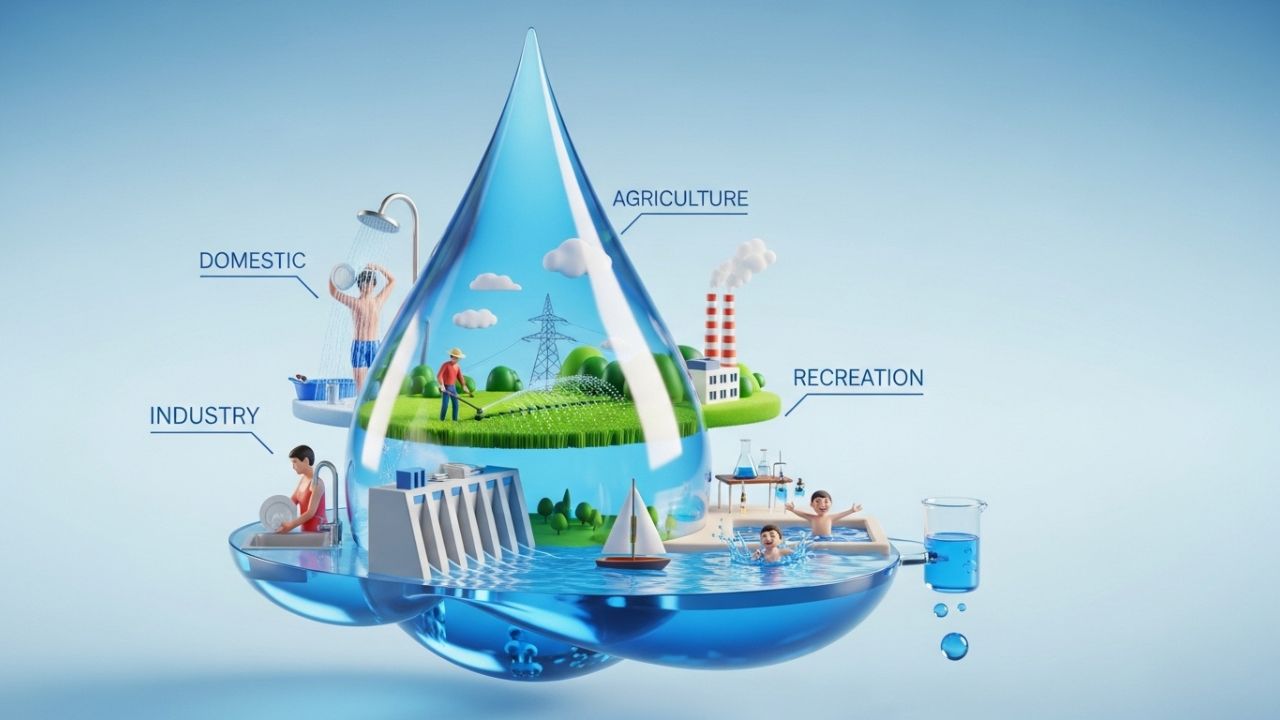
The usesofwater refer to the various ways humans, animals, plants, and industries depend on water for survival, growth, and development. These uses can be categorized into domestic, agricultural, industrial, environmental, and recreational purposes.
Each of these categories highlights how deeply water is woven into our daily routines and long-term sustainability.
UsesofWater in Daily Household Life
Drinking and Cooking
One of the most basic and essential usesofwater is for drinking and food preparation. Water regulates body temperature, aids digestion, transports nutrients, and removes toxins from the body.
Cooking also requires water for boiling, steaming, washing ingredients, and preparing beverages. Without clean drinking water, human health is at serious risk.
Cleaning and Hygiene
Water is indispensable for maintaining personal and environmental hygiene. Activities such as bathing, brushing teeth, washing clothes, and cleaning homes all require water.
Good hygiene prevents the spread of infectious diseases and improves overall quality of life. Access to clean water is directly linked to better health outcomes.
Sanitation and Waste Disposal
Toilets, drainage systems, and sewage treatment plants rely on water to safely remove waste. This is one of the most overlooked but critical usesofwater, as it protects communities from deadly diseases and pollution.
UsesofWater in Agriculture
Irrigation of Crops
Agriculture consumes the largest percentage of freshwater worldwide. Crops require consistent watering for growth, photosynthesis, and nutrient absorption.
Efficient irrigation systems such as drip irrigation and sprinklers help reduce waste and improve crop yields.
Livestock Farming
Animals need water for drinking, cooling, and cleaning. Dairy production, poultry farming, and meat processing all depend on a constant water supply.
Soil Fertility and Nutrient Transport
Water dissolves nutrients in the soil, making them accessible to plant roots. Without proper moisture, crops cannot absorb essential minerals, leading to poor yields.
UsesofWater in Industry
Manufacturing Processes
Industries use water for cooling machinery, washing raw materials, dissolving chemicals, and generating steam. From textiles to electronics, water plays a major role in production.
Power Generation
Hydroelectric power plants use flowing water to generate electricity. Even thermal power plants rely on water for cooling systems.
This makes water a key resource in global energy production.
Cleaning and Equipment Maintenance
Factories use water to clean machines, transport materials, and ensure product quality. Without it, industrial operations would come to a halt.
Environmental UsesofWater
Supporting Ecosystems
Rivers, lakes, wetlands, and oceans are home to millions of species. These ecosystems depend on water to maintain biodiversity and natural balance.
Regulating Climate
Water helps regulate Earth’s temperature through evaporation and rainfall. Oceans store heat and distribute it across the planet, making climates more stable.
Plant Growth and Forest Health
Trees and plants use water for photosynthesis, oxygen release, and growth. Forests, in turn, purify the air and support wildlife.
UsesofWater in Human Health and Medicine
Hydration and Body Functions
More than 60% of the human body is made of water. It is essential for blood circulation, digestion, joint lubrication, and brain function.
Medical Treatments
Hospitals use water for sterilization, surgeries, dialysis, and medicine production. Clean water is critical for safe healthcare services.
Disease Prevention
Washing hands, cleaning wounds, and maintaining cleanliness all depend on water. This reduces the spread of bacteria and viruses.
Recreational and Cultural UsesofWater
Sports and Leisure
Swimming, boating, fishing, and surfing are popular water-based activities. These recreational uses improve physical health and mental well-being.
Tourism
Beaches, waterfalls, rivers, and lakes attract millions of tourists annually. Tourism boosts economies and promotes environmental awareness.
Religious and Cultural Practices
In many cultures, water is considered sacred. It is used in rituals, ceremonies, and spiritual cleansing.
UsesofWater in Urban Development
Construction
Water is required to mix concrete, cure bricks, and suppress dust at construction sites.
Firefighting
Fire departments depend on water to extinguish fires and save lives. Fire hydrants and reservoirs are crucial urban safety features.
Public Services
Parks, fountains, street cleaning, and public washrooms all rely on water supply systems.
Modern Challenges Related to UsesofWater
Water Scarcity
Many regions face severe water shortages due to overuse, pollution, and climate change.
Pollution
Industrial waste, plastic, and chemicals contaminate water bodies, making them unsafe for use.
Unequal Distribution
Some communities enjoy unlimited access to clean water, while others struggle to find safe drinking water.
Sustainable Management of Water Resources
Rainwater Harvesting
Collecting rainwater reduces dependence on groundwater and municipal supplies.
Water Recycling
Treated wastewater can be reused for irrigation, cleaning, and industrial processes.
Smart Irrigation
Technology-based irrigation systems minimize water waste and increase efficiency.
Desalination
Converting seawater into freshwater is becoming a promising solution for coastal areas.
Why Conserving Water Is Everyone’s Responsibility
Each drop of water matters. Small habits like fixing leaks, turning off taps, and using water-efficient appliances can save thousands of liters annually.
Education and awareness play a key role in changing behavior. Governments, businesses, and individuals must work together to protect water resources.
Future of Water Usage
Innovations such as AI-based water monitoring, smart meters, and eco-friendly desalination plants are shaping the future.
As the global population grows, sustainable planning will determine whether future generations have access to clean water.
Conclusion: The Lifeline of Our Planet
The usesofwater touch every aspect of life—from basic survival to technological advancement. It supports ecosystems, drives economies, and sustains human health.
However, increasing demand and climate change threaten this precious resource. Understanding its importance is the first step toward responsible usage.
By conserving water today, we protect our planet for tomorrow.