

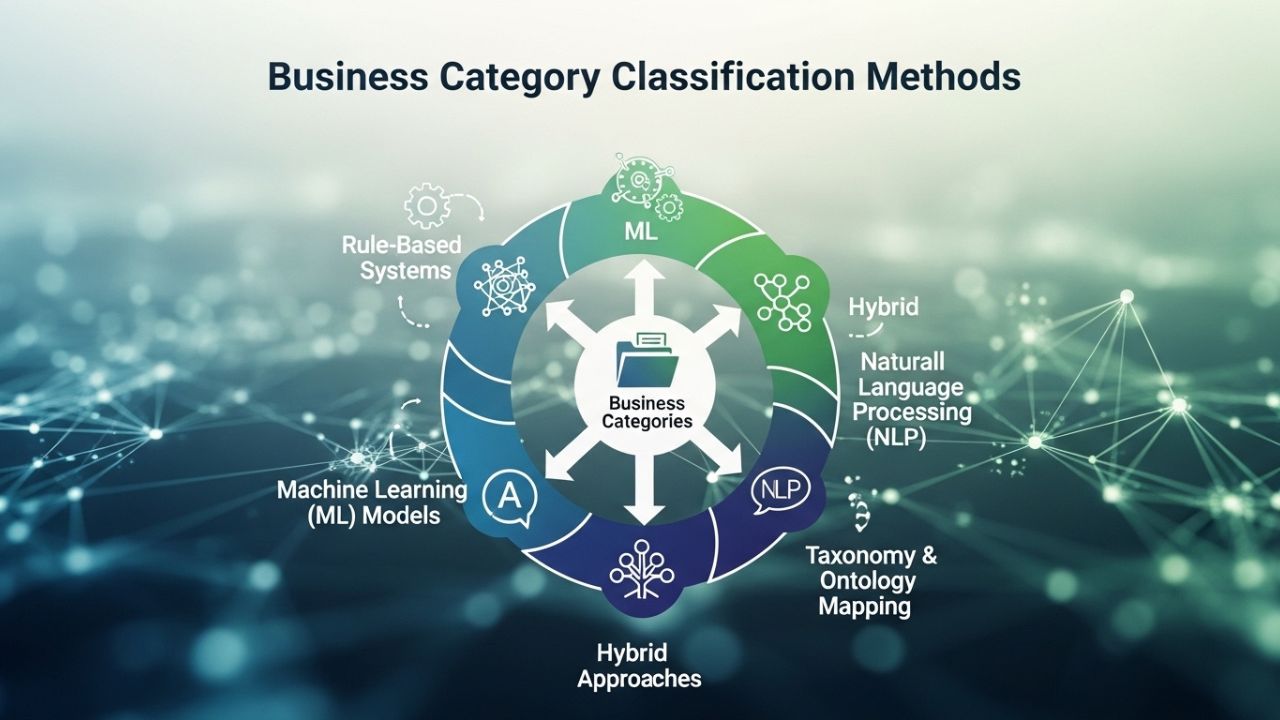
Introduction to Business Category Classification Methods
In today’s complex commercial world, companies operate across countless industries, niches, and markets. Without a structured way to group and organize them, understanding the business landscape would be nearly impossible. This is where business category classification methods become essential. These methods help governments, investors, analysts, and entrepreneurs categorize organizations based on industry, size, operations, and services. By applying clear classification systems, businesses can be compared, studied, regulated, and managed more effectively.
From startups to multinational corporations, every organization benefits from being properly classified. Accurate categorization supports better planning, smarter investments, and improved communication across markets.
What Are Business Category Classification Methods?
Business category classification methods are systematic approaches used to group companies according to shared characteristics. These characteristics might include the type of products they sell, the services they provide, their target customers, or how they operate.
Think of classification like a library system. Just as books are arranged by genre to make them easier to find, businesses are grouped into categories to simplify research and decision-making.
These methods create structure in a marketplace that would otherwise feel chaotic. They allow governments to regulate industries, help investors identify opportunities, and enable customers to understand what companies offer.
Why Business Category Classification Methods Matter
Many people underestimate the value of categorization, but it plays a major role in everyday business operations. Without classification, comparing similar companies or analyzing trends would be extremely difficult.
Improved Market Research
When businesses are grouped correctly, analysts can study trends within specific sectors. This helps predict growth, risks, and future opportunities.
Better Investment Decisions
Investors often focus on particular industries. Classification systems allow them to filter companies quickly and evaluate performance accurately.
Regulatory Compliance
Governments use classification to apply industry-specific regulations, tax rules, and reporting standards.
Clear Strategic Planning
Business owners can better understand their competition and positioning when they know exactly which category they belong to.
Common Types of Business Category Classification Methods
There isn’t just one way to classify companies. Different approaches serve different purposes. Below are the most widely used methods.
Industry-Based Classification
This is the most traditional system. Companies are grouped by the industry they operate in, such as manufacturing, healthcare, retail, or technology.
For example:
-
Retail stores
-
Construction firms
-
Financial services
-
Educational institutions
This method makes it easy to analyze sector-specific performance and trends.
Product or Service-Based Classification
Some businesses operate in the same industry but offer very different products. This method categorizes companies according to what they actually sell.
Examples include:
-
Software providers
-
Food manufacturers
-
Consulting services
-
Transportation companies
This approach is helpful for customers and suppliers looking for specific solutions.
Size-Based Classification
Companies are often grouped by size using metrics like revenue, assets, or number of employees.
Typical categories:
-
Small businesses
-
Medium enterprises
-
Large corporations
Size-based grouping helps governments create policies, loans, and tax benefits tailored to each segment.
Ownership-Based Classification
Ownership structure also matters when categorizing businesses.
Common groups include:
-
Sole proprietorships
-
Partnerships
-
Private companies
-
Public corporations
This method is especially useful for legal and financial considerations.
Geographic Classification
Businesses may be classified based on where they operate.
Examples:
-
Local businesses
-
National companies
-
International enterprises
-
Global corporations
This approach helps analyze regional markets and expansion strategies.
Modern Digital Approaches to Business Category Classification Methods
With technology advancing rapidly, traditional systems are being enhanced by digital tools and data analytics. Today, classification is more precise and automated than ever before.
Data-Driven Categorization
Artificial intelligence and machine learning can analyze company data, automatically placing businesses into relevant categories based on behavior and operations.
Dynamic Segmentation
Instead of static labels, modern systems adjust categories in real time as businesses evolve or expand into new areas.
Online Business Directories
Digital platforms classify companies for easier discovery, allowing users to search by niche, service type, or industry specialization.
These advancements make classification faster, more accurate, and adaptable.
How Businesses Benefit from Proper Classification
Understanding and applying business category classification methods offers several advantages for companies themselves.
First, it improves visibility. When categorized correctly, businesses are easier for customers and partners to find.
Second, it strengthens marketing efforts. Companies can target the right audience by focusing on specific industry segments.
Third, it supports benchmarking. Businesses can compare their performance against competitors within the same category to measure progress.
Finally, it enhances credibility. Being officially recognized within a professional category builds trust with investors and clients.
Challenges in Business Classification
While classification is useful, it isn’t always simple. Modern businesses often operate across multiple sectors, which makes labeling difficult.
For example, a technology company might also provide financial services and consulting. Should it be categorized as tech, finance, or services? The answer may vary depending on the system used.
Other challenges include:
-
Rapid market changes
-
Emerging industries
-
Hybrid business models
-
Inconsistent global standards
Because of these issues, classification methods must remain flexible and regularly updated.
Best Practices for Implementing Business Category Classification Methods
Organizations can follow certain strategies to ensure accurate categorization.
Keep Categories Clear and Specific
Avoid broad labels that group too many unrelated businesses together.
Update Regularly
Markets evolve quickly, so categories should be reviewed and revised frequently.
Use Multiple Criteria
Relying on just one factor can be misleading. Combine industry, size, and services for better accuracy.
Leverage Technology
Automation tools can simplify classification and reduce human error.
Future Trends in Business Classification
The future of business category classification methods will likely be shaped by automation, artificial intelligence, and global integration.
We can expect:
-
Smarter AI-based tagging
-
Cross-border standardization
-
Real-time updates
-
Personalized business discovery tools
As markets become more digital and interconnected, classification systems will grow more sophisticated and efficient.
Conclusion
In an increasingly competitive and data-driven economy, clear organization is not optional—it’s necessary. Business category classification methods provide the structure that businesses, investors, and regulators rely on every day. They make research easier, strategies sharper, and decisions more informed.
Whether you’re running a small startup or analyzing global markets, proper classification helps you understand where you stand and where you can grow. By applying the right methods and staying adaptable to change, businesses can navigate the marketplace with confidence and clarity.