

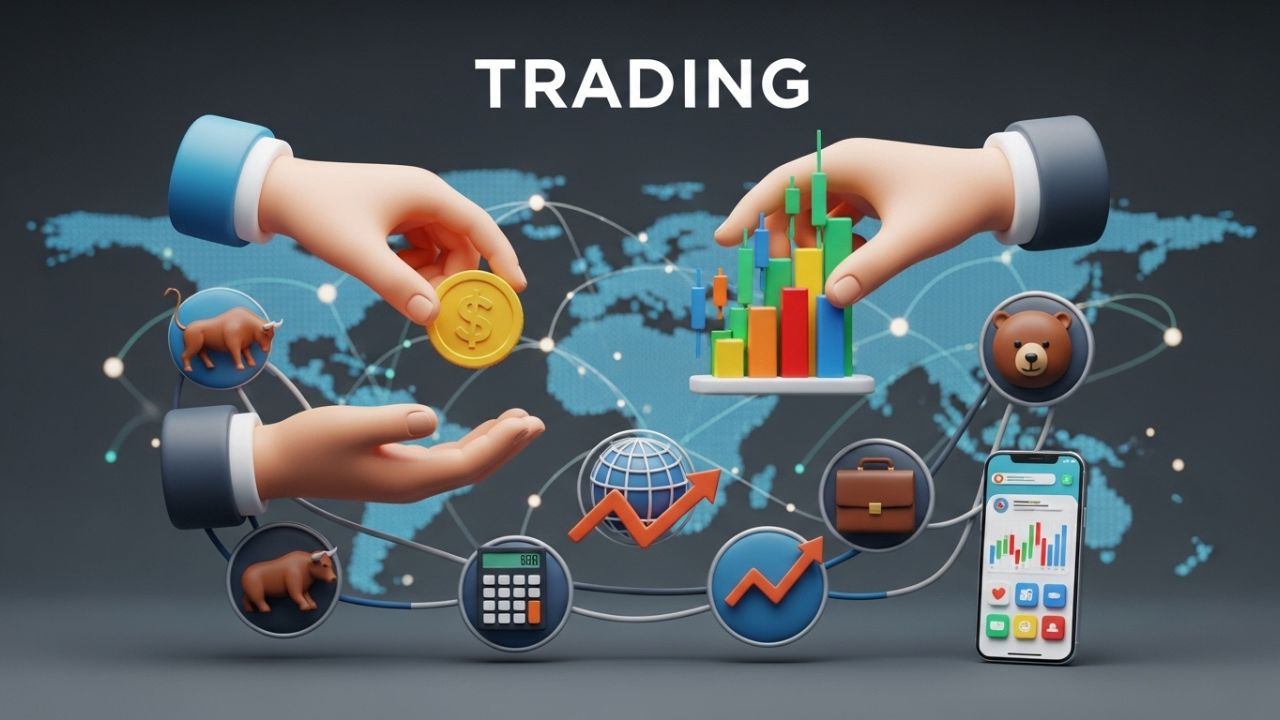
Introduction
Trading has become one of the most talked-about financial activities in the digital age. With global markets accessible through smartphones and online platforms, more people than ever are exploring trading as a way to grow wealth, hedge risks, or gain financial independence. However, successful trading is not about luck—it requires knowledge, discipline, and a clear understanding of how markets function.
This in-depth guide explains in a practical and easy-to-understand way, covering its types, strategies, benefits, risks, and modern trends shaping today’s financial markets.
What Is Trading and How Does It Work?
Trading refers to the buying and selling of financial assets with the goal of making a profit from price movements. These assets can include stocks, currencies, commodities, cryptocurrencies, and derivatives. Unlike long-term investing, usually focuses on shorter time frames and more frequent transactions.
The basic idea behind trading is simple: buy an asset at a lower price and sell it at a higher one, or sell first and buy later if prices fall. However, real-world markets are influenced by economic data, global events, investor psychology, and technical patterns, making the process more complex than it appears.
Types of Trading You Should Know
Day Trading Explained
Day trading involves opening and closing positions within the same day. Traders aim to take advantage of small price fluctuations and avoid overnight risks. This form of trading requires fast decision-making, technical analysis skills, and constant market monitoring.
Swing Trading for Short-Term Opportunities
Swing trading focuses on capturing price movements over several days or weeks. Traders analyze trends and market momentum to enter positions at favorable points. This approach is popular among those who cannot monitor markets full-time.
Long-Term Trading and Position Holding
Long-term trading, sometimes overlapping with investing, involves holding assets for months or even years. Decisions are often based on economic growth, company performance, and long-range market trends rather than daily price changes.
Algorithmic and Automated Trading
Modern trading increasingly relies on automated systems and algorithms. These programs execute trades based on predefined rules, reducing emotional decision-making and improving execution speed.
Popular Markets
Stock Market Trading
Stock trading involves buying and selling shares of publicly listed companies. It remains one of the most common and regulated forms of trading worldwide.
Forex Trading in Global Markets
Forex trading focuses on currency pairs such as USD/EUR or GBP/JPY. It is the largest financial market in the world, operating 24 hours a day across different time zones.
Cryptocurrency Trading Trends
Cryptocurrency trading has gained massive popularity due to high volatility and decentralized systems. Digital assets like Bitcoin and Ethereum offer both opportunities and risks for modern traders.
Commodity and Derivative Trading
Commodities such as gold, oil, and agricultural products are widely traded to hedge against inflation and economic uncertainty. Derivatives allow traders to speculate without owning the underlying asset.
Essential Trading Strategies for Consistent Results
Technical Analysis
Technical analysis uses charts, indicators, and historical data to predict future price movements. Popular tools include moving averages, RSI, and support-resistance levels.
Fundamental Analysis for Smart Decisions
Fundamental analysis evaluates economic data, financial statements, interest rates, and geopolitical events. This approach helps traders understand the true value of an asset.
Risk Management
Risk management is the backbone of successful feature. Setting stop-loss levels, managing position sizes, and avoiding emotional decisions protect traders from large losses.
Advantages and Challenges
Benefits
Trading offers flexibility, liquidity, and the potential for high returns. With online platforms, traders can access global markets from anywhere in the world.
Risks and Common Mistakes
Market volatility, emotional decisions, lack of knowledge, and overtrading are common challenges. Without a proper strategy, can lead to significant financial losses.
Modern Trends Shaping the Future
Technology has transformed dramatically. Artificial intelligence, mobile platforms, social trading, and real-time analytics are making markets more accessible. At the same time, regulatory frameworks are evolving to protect traders and ensure market transparency.
Sustainable trading practices and ethical investing are also gaining attention, encouraging participants to consider environmental and social factors in their decisions.
Tips to Become a Better Trading Professional
-
Start with education and practice using demo accounts
-
Create a clear plan and follow it consistently
-
Keep emotions under control and avoid impulsive decisions
-
Stay updated with market news and global events
-
Review and improve strategies regularly
Conclusion:
Trading can be a powerful financial tool when approached with discipline and knowledge. While it offers exciting opportunities, it also carries real risks. Understanding different styles, markets, and strategies helps individuals make informed decisions and build long-term success.
Whether you are a beginner or an experienced market participant, continuous learning and smart risk management are the keys to sustainable performance.